
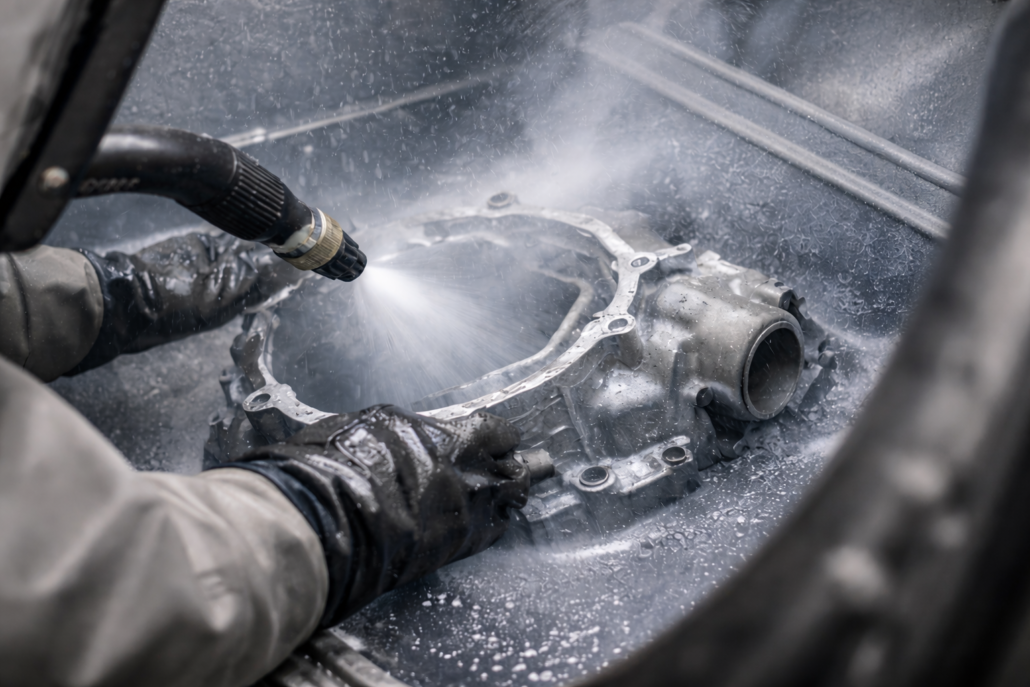
Vapour Blasting in Peterborough: the Gentle Way to Restore Alloy and Engine Parts
If you have an aluminium engine casing that’s gone dull, a set of motorcycle barrels with old corrosion, or precision parts that need cleaning without being chewed up by aggressive abrasives, vapour blasting (also called aqua blasting or slurry blasting) is built for the job. It’s one of the most effective ways to bring metal components back to a clean, consistent “satin” finish while protecting critical surfaces.
At Blast King we use vapour blasting as a specialist wet-blasting process for parts made from aluminium, bronze, magnesium, titanium, brass, copper, steel and stainless steel. Because the abrasive is carried in a water-based slurry, the process is inherently more controlled than dry blasting. That control matters when you’re dealing with gasket faces, sealing edges, threads and machined tolerances where you want cleanliness, not erosion.
Why vapour blasting beats “dry blasting” for many parts
Dry abrasive blasting has its place, but it can be too harsh for delicate castings and finely-machined components. Vapour blasting is different. It is:
• Gentle and non-erosive, helping to preserve surface detail.
• Less likely to embed abrasive media into the substrate.
• Adjustable, including the option for a subtle de-burring effect.
• Capable of producing an “as new” satin finish that’s easy to maintain.
• A great base for further finishing, including polishing or protective coatings.
That last point is often overlooked. Vapour blasting doesn’t just make parts look better, it creates a uniform surface that helps subsequent coatings or finishing work behave predictably. If you’re restoring a vehicle or refurbishing industrial components, that consistency saves time and reduces rework.
Our vapour blasting process, step by step
Good results come from process discipline. Before a component ever goes into the vapour blasting cabinet, we prepare it properly.
-
Strip-down as required. If bearings, seals or internal parts need removing, we’ll discuss this before work starts.
-
Industrial hot wash and degrease. Oils and residues are removed so the blast media can do its job evenly.
-
Coating removal where needed. If lacquer or paint is present, we’ll remove it using an appropriate chemical stripper or shot blasting step, depending on the material and finish.
-
Vapour blast to finish. We then vapour blast the component to achieve that consistent satin sheen.
-
Clean and dry. Thorough cleaning and drying is essential so the part is ready for reassembly, further finishing or protection.
If you need short-term protection on finished items, tell us at booking. We can apply suitable treatments, and we’ll also avoid applying oil where ferrous metals require re-coating.
What projects is vapour blasting ideal for?
Most customers come to us for engine and gearbox casings, carburettors, barrels and other automotive or motorcycle components. But vapour blasting is just as useful for a wide range of precision parts where you need cleanliness without damage. If you’re unsure whether your item is suitable, we’ll advise you on the best method and media for the result you want.
Local service, workshop capability, and on-site options
Blast King is a family business based in the Peterborough area with a unit on the outskirts of the city. We handle workshop work and also offer on-site services, travelling within roughly a 100-mile radius when the job calls for it.
Ready to bring parts back to life?
If you’ve got components that deserve better than harsh blasting or inconsistent results, vapour blasting is a smart upgrade. Contact Blast King for a free quote and tell us what you’re working on, what material it is, and what finish you want to achieve.
Notes (not part of the blog post): Source used for accuracy: Blast King homepage/service description.

Leave a Reply
Want to join the discussion?Feel free to contribute!